
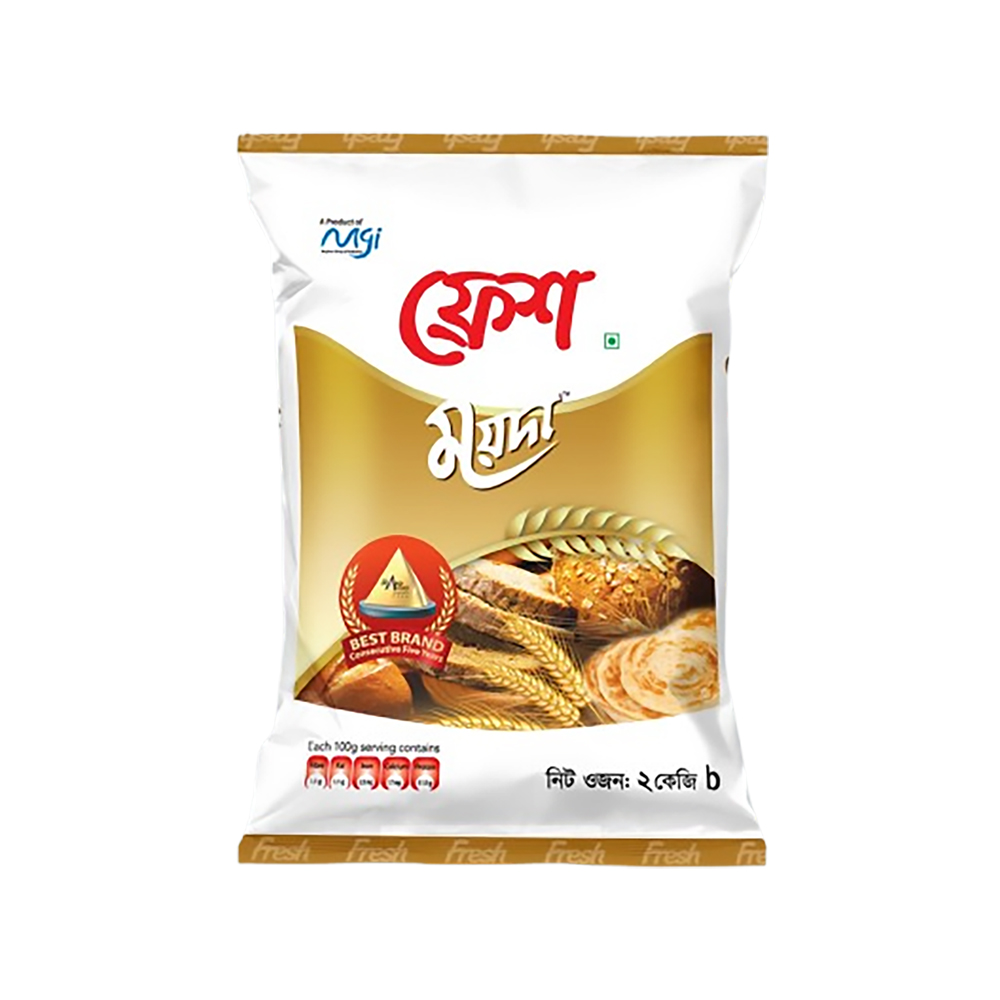
Fresh White Flour (Maida) – In-Depth Details
- Product Composition and Characteristics
| Feature | Detail | Culinary Impact |
| Source | High-quality Winter Wheat. | Often milled from the starchy inner part of the wheat kernel (endosperm). |
| Milling | Finely Milled and Highly Refined. | Gives the flour its smooth, lump-free texture and brilliant white color. |
| Protein/Gluten | Lower Protein Content than typical bread flour; similar to Cake or Pastry Flour in the West. Note: Some Maida can have protein content similar to All-Purpose Flour, but the milling process often denatures the gluten. | The lower, or more denatured, protein results in a tender, less chewy crumb—perfect for soft sweets, pastries, and flatbreads like Naan. |
| Texture | Light, Airy, and Smooth (Powdery). | Easy to blend and incorporate into batters and doughs, leading to fine, consistent results. |
- Versatile Culinary Applications
Maida is a staple in Indian, Pakistani, and Bangladeshi cuisine, but its characteristics make it excellent for diverse international baking.
Indian and South Asian Cuisine
Flatbreads: Essential for soft, fluffy breads like Naan, Kulcha, and certain types of Paratha.1
Snacks (Savory): Used for the crisp outer shell of Samosas and Kachoris, as well as Pani Puri shells.2
Sweets (Mithai): Forms the base for iconic Indian desserts such as Jalebi, Gulab Jamun, and Balushahi.
Baking and Western Cuisine
Flaky Pastries: Its low-protein nature helps create delicate, flaky layers in items like puff pastry (puffs), croissants, and pie crusts.
Soft Breads: While not suitable for rustic, chewy European-style breads, it is excellent for soft, enriched doughs like dinner rolls or milk bread.
Cakes and Cookies: It produces a tender crumb in cakes, muffins, and cookies where a light texture is desired.
Reviews
There are no reviews yet.